
RESEARCH LIBRARY
Explore the Research
Dive into the science behind photobiomodulation, lasers, LEDs, and more – with cited sources.
Laser Science + Photobiomodulation
Summary: Photobiomodulation (PBM) and low-level laser therapy use carefully dosed light energy to encourage the body’s natural regenerative processes. When specific wavelengths and power levels are applied within the therapeutic window, PBM enhances mitochondrial function, promotes tissue repair, and supports systemic balance. These outcomes are substantiated by extensive peer-reviewed literature spanning decades of research.
LASER stands for Light Amplification by Stimulated Emission of Radiation. A laser produces a narrow, concentrated beam of light that is monochromatic, collimated, and coherent, meaning all photons travel in the same phase and direction. This differs from ordinary light, which scatters in multiple directions and wavelengths.
The theoretical basis for laser technology originated with Albert Einstein in 1917 and the principle of stimulated emission. The first working laser was demonstrated by Theodore Maiman in 1960, which marked the beginning of laser use in medicine and research.
Photobiomodulation (PBM), also called Low-Level Laser Therapy (LLLT), is the therapeutic use of light to trigger biological responses. It involves the application of specific wavelengths, typically between 400 nm and 1100 nm, to influence cellular metabolism without producing heat or tissue damage.
PBM has been shown to increase mitochondrial respiration and adenosine-triphosphate (ATP) production (Hopkins 2004, NIH), improve cell proliferation and collagen synthesis (Yu 1997, NIH; Corazza 2007, NIH), and enhance neural and vascular repair processes (Gigo-Benato 2004, NIH; Fillipin 2005, NIH; Morrone 2000, NIH).
Clinical and experimental research supports measurable outcomes including improved recovery from musculoskeletal injury, enhanced nerve function, and regulation of inflammatory markers.
Biological Mechanisms
When photons reach biological tissue, they are absorbed by photo-acceptor molecules known as chromophores. The most recognized chromophore in PBM is cytochrome c oxidase (CCO), the terminal enzyme in the mitochondrial electron transport chain.
Absorption of red and near-infrared photons by CCO increases electron transfer, strengthens the proton gradient across the inner mitochondrial membrane, and drives ATP synthase to convert ADP into ATP (Yu 1997, NIH; Weber 2006, NIH; Shao 2005, NIH). This enhanced energy availability promotes cell signaling, protein synthesis, and regeneration.
Light also induces the dissociation of nitric oxide (NO) from CCO binding sites, improving microcirculation and oxygen delivery (Bjordal 2006a, b, NIH).
Documented Physiological Effects
Multiple peer-reviewed studies demonstrate the following effects of PBM:
- Enhanced tissue repair and regeneration (Yu 1997, NIH; Corazza 2007, NIH)
- Improved nerve regeneration and function (Gigo-Benato 2004, NIH; Fillipin 2005, NIH)
- Reduced inflammation and pain (Bjordal 2006a, b, NIH)
- Accelerated wound closure and collagen formation (Corazza 2007, NIH; Carati 2003, NIH)
- Improved microcirculation and lymphatic drainage (Carati 2003, NIH; Weber 2006, NIH)
- Positive neurological and cerebral outcomes following ischemic events (Lampl 2007, NIH; Lapchak 2008, NIH; Oron 2007, NIH; Wu 2009, NIH)
These physiological effects are consistently linked to mitochondrial modulation, reduced oxidative stress, and up-regulation of cellular repair pathways.
Parameters Determining Dose and Biological Response
The effectiveness of PBM depends on precise control of irradiation parameters. Each factor influences how light energy interacts with tissue and determines the biological response.
- Wavelength (nm): Determines penetration depth and chromophore target. The effective range is 400 – 1100 nm.
- Power (W): The rate at which energy is delivered. Higher power shortens treatment duration but must remain within safe limits.
- Irradiance (W/cm²): Power divided by beam area. This defines intensity at the surface.
- Energy (J): Power multiplied by exposure time, representing total energy delivered.
- Fluence (J/cm²): Energy distributed across a defined area, the key measure for dosage.
- Pulse Frequency (Hz): Number of light pulses per second. Pulsing can modulate cellular resonance and signaling.
- Exposure Time: Duration of treatment. Must remain within the optimal biphasic response range.
When power and time are balanced correctly, the resulting energy density (fluence) activates photochemical reactions without producing heat or tissue damage (Bjordal 2006a, b, NIH; Hopkins 2004, NIH).
Power × Time = Energy (J); Energy / Area = Fluence (J/cm²)

Laser Light vs LED Light
LEDs are not Lasers
Make no mistake, LEDs and light therapy devices are not lasers. The differences are numerous and sit on opposite sides of the spectrum in both physics and biological performance (Moskvin 2017, NIH). The internet includes many low-cost LED and broad light devices that make health, therapeutic, and cosmetic claims, yet the evidence for real laser-like effects is weak. The good news is that such devices are generally benign. The drawback is that outcomes are often limited.
By contrast, therapeutic lasers have a substantial evidence base supporting meaningful physiological effects and clinical outcomes across tissue types and indications (Moskvin 2017, NIH).
Bottom line in technical terms: lasers emit coherent light, while LEDs and most light therapy devices emit incoherentlight (Azo Optics, overview; Optica, coherence in optics; Wiley, laser physics fundamentals).
The best analogy to show the difference between lasers, LEDs, and light therapy devices is the headlights in your car.
- Your low beams are the equivalent of a light therapy device, where the light is scattered in all directions and does not shine very far.
- An LED would be the high beams — still scattered in all directions, but travels a little farther.
- A laser is like the sun, which can travel at 186,000 miles per second in a pinpoint direction and travel to infinity. A laser beam would take 8 minutes and 20 seconds to travel the distance of 93 million miles to reach the sun.
A broad review compared lasers and conventional light sources across publications from 1973 to 2016 and concluded that LEDs cannot replicate the therapeutic behavior of laser diodes in depth delivery and biological effect profiles (Moskvin 2017, NIH).
Key notes highlighted in that review include:
- LED spots remain diffuse and lose intensity rapidly, even at higher nominal power, while laser spots remain narrow and concentrated at lower power due to coherence and collimation (Moskvin 2017, NIH).
- LEDs operate in continuous mode or with simple modulation, which limits parameter control compared with laser diodes that support true continuous and pulsed operation regimes (Moskvin 2017, NIH).
- Economic arguments have blurred categories in the market, but the physical properties remain distinct. Expecting laser-level clinical effects from LED sources is not supported by comparative evidence (Moskvin 2017, NIH).
There are hundreds of research documents showing the difference between laser diodes and LEDs. One of the most comprehensive studies was conducted by Sergey V. Moskvin (2017). The study analyzes publications from 1973 to 2016in which laser and conventional light sources were compared. If you have any doubt that an LED has little to no therapeutic benefit, this paper is a must-read (Moskvin 2017, NIH).
Key excerpts from this study include:
- The light spot of two sources with one wavelength (635 nm): LED (power 60 mW) vs laser diode (power 15 mW).
- LED devices are marketed using broad wavelength ranges (480–3400 nm) as an advantage, yet this diffuse spectrum lacks focused therapeutic effect.
- Laser diodes can operate in both continuous and pulsed modes, while LEDs can operate only in continuous or modulated continuous modes, which limits their use.
Arguments about “lasers or LEDs” have shifted from science to marketing. Many makers of “pseudo-lasers” attempt to sell LED-based devices under the brand name of “LLLT.” LEDs do have legitimate uses in areas such as photodynamic therapy or UV sterilization, but expecting clinical results comparable to low-level laser therapy (LLLT) is unrealistic (Moskvin 2017, NIH).

Coherent vs Incoherent Light
The technical explanation of laser versus light or LED devices is defined as coherent versus incoherent light. The differences are literal day and night (Azo Optics, overview; Optica, coherence in optics; Wiley, laser physics fundamentals; Geeks for Geeks, coherent source).
Coherent light has waves that are in phase and monochromatic, meaning a single wavelength or color.Incoherent light has waves that are out of phase and contain many colors.Lasers are coherent light sources, while flashlights, bulbs, and LEDs are incoherent.
- Coherent Light: Waves are in phase, oscillating together and maintaining a constant phase difference. All photons share the same wavelength and frequency. Coherent beams are used in holography, laser surgery, and optical communication.
- Incoherent Light: Waves are out of phase with random and uncorrelated relationships. Photons have different frequencies and wavelengths, producing mixed colors. Incoherent sources are used for illumination, imaging, and vision.
FDA Clearance
The Federal Food, Drug, and Cosmetic Act (FD&C Act) defines a medical device as:
“An instrument, apparatus, implement, machine, contrivance, implant, in-vitro reagent, or other similar or related article, including any component, part, or accessory, which is intended for use in the diagnosis of disease or other conditions, or in the cure, mitigation, treatment, or prevention of disease in humans or animals, or intended to affect the structure or any function of the body of humans or animals. A device does not achieve its primary intended purposes through chemical action within or on the body, and is not dependent upon being metabolized for the achievement of its primary intended purposes.” (NIH, PMC2790317)
Examples of devices include needles, syringes, surgical instruments, prosthetic devices, X-ray equipment, diagnostic test kits, and dental appliances.
Individuals purchasing or using therapeutic lasers, including veterinarians and medical professionals, should understand medical device regulation and how to verify that a device is legal for use within their jurisdiction. Devices that have not received regulatory clearance may not have demonstrated compliance with required safety and manufacturing standards (NIH, PMC2790317).
Blue Honest Inc. maintains FDA registration and listing for its photobiomodulation laser systems.
FDA Registration Information:
Owner/Operator: 10092495
Facility/Company Name: Blue Honest Inc.
This clearance confirms that Blue Honest laser systems meet the applicable FDA requirements for safety, labeling, and device classification.
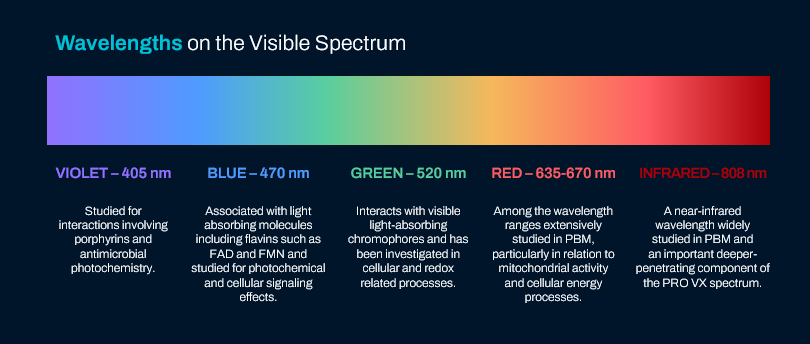
Wavelengths, Nanometers, Electron Transport Chain + Mitochondrial Activation
Light wavelengths are categorized into three primary bands:
- Ultraviolet Light (0 – 400 nm): Known as “detrimental light.” At 350–400 nm these wavelengths are used in medical and industrial lasers for precision cutting, cauterizing, and engraving. Below 350 nm the light becomes intensely focused and is used for metal cutting and similar high-temperature applications.
- Visible Light (400 – 780 nm): Referred to as “living light,” this range includes violet through red wavelengths and supports biological activity and cellular communication.
- Infrared Light (≥ 780 nm): Invisible to the eye, infrared light penetrates deeper tissue layers and interacts strongly with cellular structures to promote regenerative processes.
Each wavelength interacts with biological systems in distinct ways, corresponding to specific chromophores and mitochondrial complexes that generate energy within the cell.
Associated Complex: I – NADH Dehydrogenase
- Violet light carries the highest photon energy and initiates the electron flow of Complex I.
- A 405 nm laser emulsified fat and improved cholesterol balance in hyperlipidemic blood samples, indicating enhanced lipid metabolism (PubMed 29710746).
- It inactivated methicillin-resistant Staphylococcus aureus by altering its membrane potential (PubMed 28426977).
- In disc-cell studies, 405 nm exposure reduced IL-6, IL-8, IL-1β, and TNF-α secretion, demonstrating anti-inflammatory effects (PubMed 25557915).
- It produced complete inactivation of Gram-positive and Gram-negative bacterial isolates including S. aureus, S. epidermidis, E. faecalis, and E. coli (PMCID PMC5699711).
- Violet light also excites flavoproteins and porphyrins, activating both Complex I and II to begin ATP synthesis (PubMed 19355884
Associated Complexes: II – FADH Dehydrogenase and IV – Cytochrome c Oxidase
- Blue light excites flavins (FAD and FMN) that transfer electrons through Complex II and indirectly stimulate Complex IV.
- It increased mitochondrial oxygen use by activating FMN and FAD (PubMed 11443119; PubMed 28633062).
- A 470 nm LED array inactivated Pseudomonas aeruginosa by more than 90 percent after 80 minutes (PubMed 28064075).
- Blue light reduced Salmonella enterica counts by 93 percent at 110 J/cm² (Bumah 2015b, PMCID PMC5699711).
- At 465 nm it eradicated methicillin-resistant Staphylococcus pseudintermedius in canine isolates after 112.5 J/cm² exposure (Schnedeker 2017, PMCID PMC5699711).
- Blue light also improved mitochondrial signaling comparable to near-infrared exposure (PubMed 30701682).
Associated Complex: III – Cytochrome c Reductase
- Green light stimulates cytochrome c reductase and supports oxidative phosphorylation.
- 75% of reviewed PBM studies reported beneficial biological responses to green light while 9% showed negative effects and 16% no change (PMCID PMC6685747).
- Porphyrins within Complex III absorb light at 502, 540, and 560 nm, enabling green-wavelength activation (J-Stage Laser Medicine 3 (1): 91-OR-02).
- A 525 nm clinical study on 29 migraine patients reduced average headache days from 7.9 to 2.4 for episodic and 22.3 to 9.4 for chronic cases after 10 weeks of daily exposure (PMCID PMC8034831).
- Dual 520 nm and 810 nm light reduced S. mutans biofilm counts through synergistic photochemical action (PubMed 32758054).
Associated Complex: IV – Cytochrome c Oxidase
- Red light penetrates deeper tissue and directly activates cytochrome c oxidase to increase oxygen metabolism and ATP synthesis.
- The 600–660 nm range supports lymphatic function and superficial acupoint therapy (Chiropractic Economics Apr 14 2022).
- Low-level 660 nm lasers improved musculoskeletal healing and accelerated nerve regeneration (PMCID PMC3865741; PubMed 22488690).
- Combined 670 nm and 810 nm exposure improved motor and neurological symptoms in 55% of Parkinson’s patients (PubMed 31536464).
- Red light promotes nitric-oxide release that enhances oxygen delivery and vascular balance (PMCID PMC6685747).
Associated Complex: V – ATP Synthase and Systemic Regeneration
- Infrared light penetrates up to 5 cm and sustains the final stage of ATP synthesis.
- Wavelengths between 760 and 850 nm achieved 5 mW/cm² intensity at 5 cm depth when surface power was 1 W, supporting deep-tissue photobiomodulation (PMCID PMC4743666).
- Infrared light reduced neural damage and accelerated neuronal recovery in 820–830 nm studies (PMCID PMC3865741).
- Near-infrared exposure significantly altered gut-microbiome composition, increasing beneficial Allobaculum bacteria after 14 days (PubMed 30074108).
- Infrared wavelengths also demonstrated protective and anti-inflammatory effects in neural and vascular models (PMCID PMC5505738).
Figuring out correct placement, timing, and combination of laser settings can take years of research and testing. Fortunately, this work has already been done for you.
You would not want to increase energy before going to bed, just as you would not want to be in a sleepy and relaxed state before a soccer game. Understanding when and how to apply each laser setting is essential to achieving the best results.
If you have a specific area of pain, identifying the correct placement is simple. However, when pain or inflammation is systemic and affects multiple areas throughout the body, the correct approach is not always obvious. There are six key placement points that address the body systemically, and they are not the same as the areas where pain is felt.
While pain and inflammation are among the most straightforward areas to support, there are hundreds of placement examples that require precise understanding. Each has its own protocol, duration, and power setting that influence the body’s overall response.
Every Blue Honest PRO VX includes a comprehensive binder with detailed diagrams, explanations, and step-by-step placement instructions for every setting and application. This includes specific placement guidance for both human and animal protocols.
Each wavelength interacts with a different chromophore within the mitochondrial electron-transport system, creating a broad spectrum of biological responses (Shao 2005, NIH).
Simultaneous or sequential wavelengths can activate multiple mitochondrial complexes for broader results.
- 405 nm + 470 nm (Violet and Blue): Inhibit quorum sensing and biofilm growth across bacterial species, producing rapid microbial inactivation (PubMed 22846406; PMCID PMC5699711).
- 405 nm + 470 nm (Violet and Blue): Inhibit quorum sensing and biofilm growth across bacterial species, producing rapid microbial inactivation (PubMed 22846406; PMCID PMC5699711).
- 405 nm + 520 nm + 635 nm (Violet, Green, Red): Enhanced disruption of Candida albicans biofilms compared with single wavelengths (PubMed 33652865).
- 520 nm + 810 nm (Green and Infrared): Dual wavelengths reduced S. mutans biofilm counts through synergistic photoreaction (PubMed 32758054).
- 670 nm + 810 nm (Red and Infrared): Improved neurological outcomes and ATP production in Parkinson’s studies (PubMed 31536464).Full-spectrum combinations from violet through infrared activate the entire electron transport chain, enhancing mitochondrial output and cellular recovery.
Low-level laser therapy combining violet, green, red, and infrared light stimulates all mitochondrial complexes. Nutrients that support ATP production include B-complex (vitamin B12 especially), magnesium, vitamin C, Huperzine, alpha-lipoic acid (ALA), glutathione, CoQ10, acetyl-L-carnitine, zinc, and selenium.Source: Laser Therapy for Mitochondrial Dysfunction, Robert Silverman DC, April 16 2024 (Chiropractic Economics).
Body regeneration depends on adenosine triphosphate (ATP) production inside the mitochondria. ATP forms through the activation of four enzyme complexes collectively known as the Electron Transport Chain (ETC).
Each complex is sensitive to specific wavelengths of light. When photons are absorbed by chromophores such as cytochrome c oxidase, flavoproteins, and porphyrins, the light energy is transformed into biochemical energy that fuels repair and growth. National Center for Biotechnology Information (PMC2790317)
The ETC is a sequence of four protein complexes that transfer electrons through redox reactions, creating a proton gradient that drives ATP synthesis through oxidative phosphorylation. Located in the inner mitochondrial membrane, this process occurs in both cellular respiration and photosynthesis. In respiration, electrons derived from nutrients move through the complexes, releasing energy that is converted into biochemical fuel.
The first law of photobiology states that for visible light to affect a living system, photons must be absorbed by specific chromophores. These chromophores include chlorophyll in plants and cytochrome c oxidase, hemoglobin, and flavoproteins in human tissue. When these molecules absorb light, they initiate electron movement within the mitochondrial chain, leading to ATP formation.
- Complex I – NADH Dehydrogenase: Complex I (ubiquinone oxidoreductase) initiates the chain by oxidizing NADH and transferring two electrons to flavin mononucleotide (FMN). Violet light near 405 nm stimulates this reaction by energizing FMN and the eight iron–sulfur clusters within the enzyme. Absorption peaks in the blue–violet range enhance mitochondrial membrane potential and ATP output (PubMed 19355884; ResearchGate Flavoproteins Study 2000).
- Complex II – FADH Dehydrogenase: Complex II (succinate dehydrogenase) oxidizes succinate to fumarate and transfers electrons through FAD. Blue light around 470 nm activates FADH₂, while red light near 670 nm enhances the flow to coenzyme Q. Although Complex II does not pump protons, its activation improves total ATP yield and stabilizes mitochondrial activity (NCBI Bookshelf NBK9839; PubMed 30701682).
- Complex III – Cytochrome c Reductase: Complex III accepts electrons from coenzyme Q and transfers them to cytochrome c. Green wavelengths between 520 and 560 nm, along with violet 405 nm light, stimulate this complex by activating porphyrins within the heme groups. Absorption peaks at 502, 540, and 560 nm confirm its light sensitivity (J-Stage Laser Medicine 3 (1): 91-OR-02; PMC 8606124). This interaction supports oxidative phosphorylation and redox balance (PubMed 16118473).
- Complex IV – Cytochrome c Oxidase (CCO): Complex IV is the terminal enzyme of the chain. It contains heme and copper centers that absorb red, blue, and violet light—especially 670 nm red, 470 nm blue, and 405 nm violet. Activation of CCO increases oxygen utilization, electron transport rate, and ATP synthesis. Porphyrin rings within the enzyme absorb strongly at 410 nm, while 670 nm light promotes nitric-oxide release that enhances cellular respiration (PubMed 10365442; PMCID PMC6685747).
- Complex V – ATP Synthase: ATP Synthase (Complex V) converts the proton gradient generated by the previous complexes into ATP. As the final step of oxidative phosphorylation, it is indirectly activated through the sequential stimulation of Complexes I–IV. Free mitochondria in circulation can also absorb photons and distribute this photonic energy throughout the body, creating systemic regenerative effects (Chiropractic Economics, Silverman DC, Apr 16 2024).
- Complex I – NADH Dehydrogenase: Complex I (ubiquinone oxidoreductase) initiates the chain by oxidizing NADH and transferring two electrons to flavin mononucleotide (FMN). Violet light near 405 nm stimulates this reaction by energizing FMN and the eight iron–sulfur clusters within the enzyme. Absorption peaks in the blue–violet range enhance mitochondrial membrane potential and ATP output (PubMed 19355884; ResearchGate Flavoproteins Study 2000).
- Complex II – FADH Dehydrogenase: Complex II (succinate dehydrogenase) oxidizes succinate to fumarate and transfers electrons through FAD. Blue light around 470 nm activates FADH₂, while red light near 670 nm enhances the flow to coenzyme Q. Although Complex II does not pump protons, its activation improves total ATP yield and stabilizes mitochondrial activity (NCBI Bookshelf NBK9839; PubMed 30701682).
- Complex III – Cytochrome c Reductase: Complex III accepts electrons from coenzyme Q and transfers them to cytochrome c. Green wavelengths between 520 and 560 nm, along with violet 405 nm light, stimulate this complex by activating porphyrins within the heme groups. Absorption peaks at 502, 540, and 560 nm confirm its light sensitivity (J-Stage Laser Medicine 3 (1): 91-OR-02; PMC 8606124). This interaction supports oxidative phosphorylation and redox balance (PubMed 16118473).
- Complex IV – Cytochrome c Oxidase (CCO): Complex IV is the terminal enzyme of the chain. It contains heme and copper centers that absorb red, blue, and violet light—especially 670 nm red, 470 nm blue, and 405 nm violet. Activation of CCO increases oxygen utilization, electron transport rate, and ATP synthesis. Porphyrin rings within the enzyme absorb strongly at 410 nm, while 670 nm light promotes nitric-oxide release that enhances cellular respiration (PubMed 10365442; PMCID PMC6685747).
- Complex V – ATP Synthase: ATP Synthase (Complex V) converts the proton gradient generated by the previous complexes into ATP. As the final step of oxidative phosphorylation, it is indirectly activated through the sequential stimulation of Complexes I–IV. Free mitochondria in circulation can also absorb photons and distribute this photonic energy throughout the body, creating systemic regenerative effects (Chiropractic Economics, Silverman DC, Apr 16 2024).
Photonic Stimulation of Cellular Energy
The four mitochondrial complexes form the foundation for cellular energy regeneration. When stimulated by their corresponding wavelengths, these enzymes restore electron flow and drive ATP synthesis. Violet and blue light activate the early complexes, green light stabilizes mid-chain reactions, and red to infrared light energizes the terminal stages for full-spectrum ATP production.
This cooperative stimulation enhances mitochondrial efficiency, improves oxygen metabolism, and supports regeneration in both surface and deep tissues.
Light + Chromophores
Chromophores—cytochromes, flavoproteins, and porphyrins—serve as the light receptors that convert photons into biochemical energy. Porphyrins absorb strongly between 400 and 420 nm, while red light around 670 nm facilitates nitric-oxide release, improving circulation and oxygen use (PMC 6685747). The synchronized absorption of these wavelengths forms the photochemical basis of mitochondrial regeneration.
From Light to Biochemical Energy
Sequential activation of the ETC increases mitochondrial membrane potential and converts adenosine diphosphate (ADP) to adenosine triphosphate (ATP). Infrared wavelengths at 808 nm penetrate up to 5 cm into soft tissue, extending this energy process deep into muscles, nerves, and connective structures. This multi-level photonic stimulation unites visible and infrared light to create both local and systemic regenerative outcomes.
Clinical + Systemic Implications
Activating all four mitochondrial complexes through wavelength-specific light has been shown to enhance healing, neurological recovery, and pain reduction. These effects arise from improved mitochondrial efficiency and reduced oxidative stress across organ systems. The full-spectrum photobiomodulation used in advanced systems such as the PRO VX enables simultaneous activation of every ETC complex, optimizing ATP output and overall health regeneration.
Photonic Stimulation of Cellular Energy
The four mitochondrial complexes form the foundation for cellular energy regeneration. When stimulated by their corresponding wavelengths, these enzymes restore electron flow and drive ATP synthesis. Violet and blue light activate the early complexes, green light stabilizes mid-chain reactions, and red to infrared light energizes the terminal stages for full-spectrum ATP production.
This cooperative stimulation enhances mitochondrial efficiency, improves oxygen metabolism, and supports regeneration in both surface and deep tissues.
Light + Chromophores
Chromophores—cytochromes, flavoproteins, and porphyrins—serve as the light receptors that convert photons into biochemical energy. Porphyrins absorb strongly between 400 and 420 nm, while red light around 670 nm facilitates nitric-oxide release, improving circulation and oxygen use (PMC 6685747). The synchronized absorption of these wavelengths forms the photochemical basis of mitochondrial regeneration.
From Light to Biochemical Energy
Sequential activation of the ETC increases mitochondrial membrane potential and converts adenosine diphosphate (ADP) to adenosine triphosphate (ATP). Infrared wavelengths at 808 nm penetrate up to 5 cm into soft tissue, extending this energy process deep into muscles, nerves, and connective structures. This multi-level photonic stimulation unites visible and infrared light to create both local and systemic regenerative outcomes.
Clinical + Systemic Implications
Activating all four mitochondrial complexes through wavelength-specific light has been shown to enhance healing, neurological recovery, and pain reduction. These effects arise from improved mitochondrial efficiency and reduced oxidative stress across organ systems. The full-spectrum photobiomodulation used in advanced systems such as the PRO VX enables simultaneous activation of every ETC complex, optimizing ATP output and overall health regeneration.

Amount of Laser Diodes
A laser diode is the actual light source emitted from a laser. Health lasers are classified as Class 3B, meaning the combined output of all diodes in a single laser cannot exceed 1599 mW of total power.
Using multiple diodes within one system significantly enhances the overall health outcome. Each diode contributes energy at its specific wavelength, and when multiple diodes are combined, the total biological benefit multiplies without generating excess heat.
Research demonstrates that visible laser diodes (400 – 780 nm) should remain below 13 mW per diode to avoid burning tissue. The ideal operating power for visible diodes is 10 mW each. Increasing the number of diodes increases effectiveness proportionally without risk.
Infrared laser diodes operate beyond 780 nm, producing invisible light that penetrates several centimeters into the body. These wavelengths can safely exceed visible-light power levels and deliver the deep-tissue energy necessary for advanced regenerative effects. Research shows that 1000 mW of infrared power provides optimal penetration and therapeutic results (Chiropractic Economics, Issue 12, July 2024 – Francisco Cidral, “Photobiomodulation May Offer Effective Pain Management,” July 23 2024*).
The Full-Spectrum Approach
The most effective configuration combines all visible wavelengths with infrared diodes, uniting surface and deep-tissue photobiomodulation. The ideal full-spectrum laser integrates 1000 mW infrared power with multiple visible-spectrum diodes (each at 10 mW).
The PRO VX is the first and only FDA-cleared full-spectrum laser, designed precisely on these parameters. Because of this configuration, the PRO VX can penetrate several inches into the body and disperse light several inches in diameter within seconds of use.
Pulsed Frequencies
Precision energy through rhythm + resonance
Music is created and heard through frequencies. Chakras are frequencies. Your telephone, radio, and television all function through frequencies. Every living thing on Earth, including the planet itself, oscillates at a specific frequency. This includes every tissue in every human, animal, and plant, as well as every bacterium, virus, protozoa, parasite, fungus, and mold.
If you want to “dial in” your laser to perfection, you need to use pulsed frequencies that correspond to what you want to enhance or eliminate.
The Blue Honest PRO VX incorporates 736 total frequencies, including the top eight frequencies in every setting. Laser frequencies are measured in Hertz (Hz), representing the number of laser pulses emitted per second. A higher frequency means more pulses per second.
When using a pulsed power of 10 to 15 W and a frequency of 80 to 150 Hz (parameters most often used for infrared 904 nm LLLT), the average power is about 0.1 mW – 100 to 1000 times lower than continuous light. Laser light in pulsed mode is therefore 100 to 1000 times more efficient than continuous mode in producing biological reactions.
Only pulsed LLLT allows techniques such as non-invasive laser blood illumination (NLBI), stimulation of deep tissues and organs, modulation of immune and nerve systems, and transcranial applications (PMC5682984).
The effect of high pulse frequencies is superior to continuous wave mode, with studies showing that pulsed lasers consistently produce stronger biological effects across multiple models (Nature 2018; PubMed 20662021).
Pulsed frequencies enhance photochemical reactions, biofilm disruption, penetration, and safety in antimicrobial photodynamic therapy (PubMed 38839711; PubMed 7140077). Pulsed blue light has been shown to be 40 to 100 times more potent than continuous blue light in viral inactivation, including herpes simplex, HIV, and coronaviruses (PMC7194064).
Keshri et al. found that 810 nm infrared light pulsed at 10 Hz produced faster wound healing and higher ATP levels than either 100 Hz or continuous modes, with 10 Hz showing the greatest mitochondrial Complex IV absorption (PMC5115773). Miyamoto et al. showed that 514.5 nm green light pulsed at 10 Hz induced apoptosis in HeLa cells, while continuous wave caused necrosis (PubMed 10672529). Biostimulatory levels of pulsed red and near-infrared light restored ATP more effectively than continuous light by improving metabolism and reducing intracellular viscosity (PubMed 27857496).
Everything in existence vibrates at its own frequency. The PRO VX incorporates 736 pulsed frequencies that can be used to match the natural oscillation of tissues, organs, and systems within the body.
Many laser manufacturers do not provide access to these settings, while some charge for seminars to obtain them. Blue Honest shares several effective frequencies freely as part of its commitment to education and transparency.
The identified healing frequency is 110 Hz. Pretty much everything in the universe oscillates at a certain frequency. The universe frequency just happens to be 963 Hz.
How about each planet?
- Mercury: 141.27 Hz
- Venus: 221.23 Hz
- Earth: 126.22 Hz
- Mars: 144.72 Hz
- Jupiter: 183.58 Hz
- Saturn: 147.85 Hz
- Uranus: 207.36 Hz
According to Dr. Royal R. Rife, every disease has a frequency. He found that certain frequencies can prevent the development of disease and that others can destroy disease. Substances with higher frequencies will eliminate diseases of lower frequency.
This understanding raises an important question about the frequencies of the substances we eat, breathe, and absorb. Many pollutants lower healthy frequency. Processed or canned food has a frequency of zero. Fresh produce has up to 15 Hz, dried herbs from 12 to 22 Hz, and fresh herbs from 20 to 27 Hz.
Nikola Tesla, the American inventor and pioneer of electrical technology, stated that if certain external frequencies interfering with the body could be removed, our resistance to disease would increase. Tesla identified measurable resonances including 333 Hz for balance and harmony, 639 Hz for harmony in relationships, and 999 Hz for completion and clarity. Source: justalist.blogspot.com/2008/03/vibrational-frequency-list.html
Human brainwave frequencies:
- Delta (0.5 – 4 Hz) Deep sleep and healing
- Theta (4 – 8 Hz) Meditation and relaxation
- Alpha (8 – 12 Hz) Calm focus and creativity
- Beta (12 – 30 Hz) Active thought and concentration
- Gamma (30 – 100 Hz) Cognitive processing
Organ frequencies:
- Heart 33 Hz
- Liver 53 Hz
- Pancreas 66 Hz
- Prostate 10 Hz
- Ovaries 54 Hz
Pathogenic + inflammatory frequencies
- Ticks 7989 Hz (+ 7 variants)
- Staphylococcus aureus 424 Hz (+ 11 variants)
- Epstein–Barr virus 31 frequencies
- Pain 9 Hz Inflammation 42 Hz
Thousands of frequencies are known to correspond to living organisms, biological systems, and environmental oscillations.
There are eight universal frequencies and one known as the Miracle Frequency. This wavelength is described as the frequency transmitted from the sun and the frequency plants vibrate during photosynthesis. It has also been identified by researchers as the frequency used by genetic engineers worldwide to repair DNA.
All of these frequencies and more are used in the various Blue Honest PRO VX protocols.
Power
Balancing energy, precision, and performance
A laser diode is the light source within every laser. Health lasers are classified as Class 3B, which means the combined output of all diodes in one laser cannot exceed 1599 mW.
Using multiple diodes within a single laser significantly increases the beneficial health outcome.
Visible laser diodes, ranging from 400 nm to 780 nm, should not exceed 13 mW, as higher outputs may cause burns. The ideal output for visible diodes is 10 mW. Multiple diodes of the same wavelength can be combined without producing excess heat or cumulative damage. For example, if one 635 nm red diode provides a certain therapeutic benefit, four 635 nm diodes at the same output would increase that benefit fourfold without increasing the individual diode power.
Infrared laser diodes, with wavelengths above 780 nm, are invisible to the eye and can safely operate at higher power levels. Research demonstrates that 1000 mW is the ideal power level to achieve optimal tissue penetration for infrared light.Source: CE Issue 12, July 2024, “Photobiomodulation May Offer Effective Pain Management,” Francisco Cidral, July 23, 2024.
The perfect full-spectrum laser combines both visible and infrared diodes. Ideally, this configuration would utilize 1000 mW of infrared power and multiple visible diodes at 10 mW each.
The Blue Honest PRO VX is the first and only FDA-cleared full-spectrum laser.
PRO VX Diode Configuration:
- (4) 635 nm Red (R) diodes 10 mW each Total 40 mW
- (2) 670 nm Bright Red (R) diodes 10 mW each Total 20 mW
- (4) 808 nm Infrared (IR) diodes 250 mW each Total 1000 mW
- (2) 520 nm Green (G) diodes 10 mW each Total 20 mW
- (2) 405 nm Violet (V) diodes 10 mW each Total 20 mW
- (1) 470 nm Blue (B) diode Total 10 mW
Total Combined Output: 1110 mW
This balanced combination of visible and infrared diodes allows the PRO VX to penetrate several inches deep and disperse several inches in diameter within seconds of use.
Low-level laser light is defined by its visible and near-infrared wavelengths (400 nm to 1100 nm) and its low output power, typically between 1 mW and 500 mW.
Maintaining low power ensures minimal thermal output and prevents tissue heating while allowing photobiostimulation to occur.
Studies show that it takes at least 13 W/cm² to cause a first-degree skin burn and 24 W/cm² to cause a second-degree burn. Devices operating within the low-power range of 1 mW–500 mW/cm² are therefore considered safe and effective for photobiomodulation.
Sources: PMC2790317 and University of Calgary Laser Safety Manual.
Comparing devices of 10 mW, 100 mW, and 1000 mW demonstrates how higher-power lasers can reduce treatment time and improve efficiency without compromising safety. Higher-power systems deliver the required total energy in a fraction of the time while maintaining low thermal risk.
(CE Issue 12, July 2024, “Photobiomodulation May Offer Effective Pain Management,” Francisco Cidral, July 23, 2024.)
Delivering optimal energy swiftly is critical for effective outcomes, making higher-power lasers more beneficial in clinical practice when used within safe output limits.
Early researchers in low-level laser therapy observed that when the intensity (power divided by beam area) was not properly controlled, results were inconsistent. Many attempted to achieve the recommended 1–4 J/cm² range by extending irradiation time while using weak lasers, which often produced variable or negative results.
Subsequent research demonstrated that surpassing a specific intensity threshold is essential for reproducible biostimulatory effects. This principle, first described in early patents and later confirmed in foundational photobiology studies, remains central to effective laser therapy.
Source: PubMed 11547815
Timing (Arndt–Schulz Law)
Matched to Power
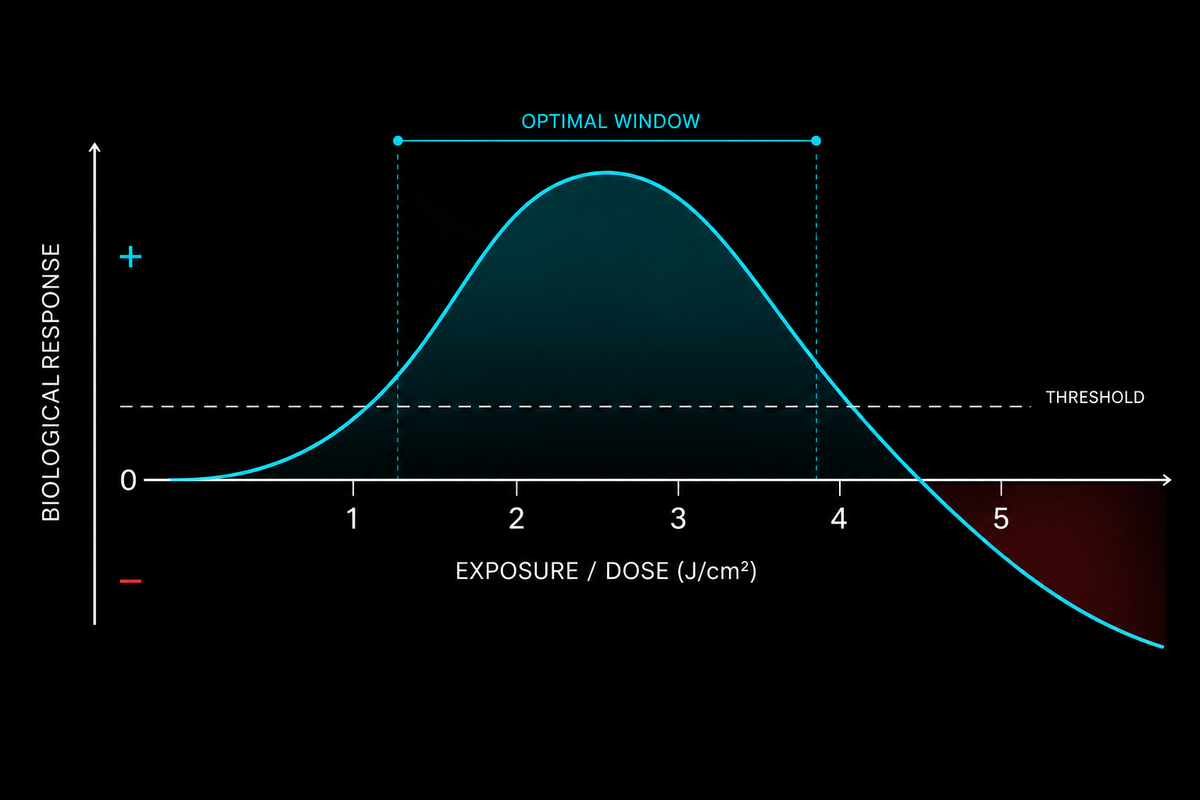
When it comes to laser therapy, more is not better. Lasers operate on a bell curve, meaning there is a precise point of optimal exposure time for each protocol. Applying light for too short a period will not achieve a therapeutic effect, while too long of an exposure can cancel the intended benefits.
Although excessive laser exposure will not cause harm, it does not improve results. The goal is to deliver the ideal duration where the laser’s energy produces the maximum biological response.
To calculate the perfect timing for any protocol, it is necessary to know the wavelengths (nanometers) being used, the power output of each diode, the applied frequencies, and how many times the same placement is used. Timing must always be matched to power.
The Arndt–Schulz Law (Biphasic Dose Response)
The Arndt–Schulz Law, also referred to as the Biphasic Dose Response, explains that living tissue responds positively only within an optimal dose range. Too little light produces no measurable effect, while too much can suppress or neutralize the desired response.
Every biological system has a specific stimulation window. When light is delivered within this optimal range, the maximum therapeutic benefit is achieved. Studies of wound healing have demonstrated this clearly — doses that were too low had no effect, and those that were too high delayed recovery, while the properly timed exposure resulted in faster healing.
Source: International Society of Hair Restoration Surgery Forum
Light Dosimetry
Proper calibration of irradiance and exposure time is critical for consistent, effective outcomes. This process, known as light dosimetry, ensures that tissues receive the correct amount of light energy without overexposure.
Accurate dosimetry allows for microbial and biofilm inactivation while minimizing any risk to surrounding healthy tissue. By matching timing precisely to power and wavelength, photobiomodulation occurs at its highest level of efficiency.Source: PMC9941239
Placement + Settings
Application protocols, timing, and coordination
Figuring out correct placement, timing, and combination of laser settings can take years of research and testing. Fortunately, this work has already been done for you.
You would not want to increase energy before going to bed, just as you would not want to be in a sleepy and relaxed state before a soccer game. Understanding when and how to apply each laser setting is essential to achieving the best results.
If you have a specific area of pain, identifying the correct placement is simple. However, when pain or inflammation is systemic and affects multiple areas throughout the body, the correct approach is not always obvious. There are six key placement points that address the body systemically, and they are not the same as the areas where pain is felt.
While pain and inflammation are among the most straightforward areas to support, there are hundreds of placement examples that require precise understanding. Each has its own protocol, duration, and power setting that influence the body’s overall response.
Every Blue Honest PRO VX includes a comprehensive binder with detailed diagrams, explanations, and step-by-step placement instructions for every setting and application. This includes specific placement guidance for both human and animal protocols.
Humans & Animals
Full-Spectrum Applications in Humans + Animals
The PRO VX laser system was developed for both human and animal health applications, combining a full-spectrum wavelength array with pulsed frequency delivery. This design allows precise control for tissue repair, immune modulation, neurological support, and systemic recovery. Photobiomodulation (PBM), also referred to as low level laser therapy (LLLT), uses coherent light to activate mitochondrial energy production and restore normal cellular function.
Research across species shows that PBM enhances healing, reduces inflammation, and improves performance when correct parameters are used. The same biological mechanisms observed in humans—ATP stimulation, collagen synthesis, and microvascular regulation—are seen in animal studies demonstrating faster recovery and decreased pain (PMC9951699; PubMed30243364).
At the cellular level, PBM stimulates cytochrome c oxidase within mitochondria, boosting ATP synthesis and improving oxidative balance. This process regulates nitric oxide release and reactive oxygen species, initiating anti-inflammatory and tissue-repair pathways (PMC9951699).
In both humans and animals, coherent laser light enhances microcirculation, oxygen delivery, and lymphatic flow. These effects extend into deeper tissues and nerves, confirming PBM’s influence on systemic biological recovery rather than surface-level response alone (PubMed30243364).
Photobiomodulation has shown consistent benefits in wound healing, musculoskeletal recovery, neurologic regeneration, and dermatologic support. Controlled studies report faster tissue closure, stronger collagen alignment, and reduced inflammation when PBM is applied with appropriate wavelength and dose (PMC9502196).
In companion animals, PBM has been used successfully for orthopedic pain management. Dogs with hip osteoarthritis treated with red and infrared light experienced significant reductions in lameness and improved joint mobility compared to controls (PubMed35895799).
Equine studies demonstrate similar results. Horses receiving combined chiropractic care and laser therapy exhibited decreased back pain and improved performance metrics compared to baseline (PubMed32067657).
Across human and veterinary applications, the data consistently indicate that photobiomodulation supports tissue repair, mitigates inflammation, and enhances recovery when coherent laser light is applied at biologically compatible frequencies and intensities (PMC9951699).
Effective PBM therapy depends on wavelength, frequency, pulse rate, and energy density. Red light (600–700 nm) supports skin and superficial tissues, while near-infrared light (800–900 nm) penetrates deeper to reach muscles, tendons, and nerves. Both human and animal protocols must be adjusted for pigmentation, fur or hair density, and tissue depth to maintain consistent photon absorption (PubMed30243364).
The PRO VX separates its human and animal settings to ensure accurate energy delivery across tissue types, while maintaining the same coherent full-spectrum design that underpins its clinical performance.
Herbs + Plants
Estheticians, Cosmetic, Skin, + Weight Applications
This is a special feature that exists only in the PRO VX laser. Herbs and plants use different wavelengths (nm) and frequencies than those of humans and animals. The regeneration chemical in humans and animals is called adenosine triphosphate (ATP). The regeneration chemical produced in plants is chlorophyll. They absorb different wavelengths from the sun and oscillate at different frequencies.
This PRO VX feature is especially interesting for estheticians, herbalists, therapists, naturopaths, natural healers, or anyone wanting to enhance lotions and creams, or get the most out of the clean foods and supplements they take.
Go to our Wavelengths / Nanometers research page for more information on these processes.
In the photosynthetic electron-transfer reactions (also called the “light reactions”), energy derived from sunlight energizes an electron in the green organic pigment chlorophyll, enabling it to move along an electron-transport chain in the thylakoid membrane in much the same way that an electron moves along the respiratory chain in mitochondria. Chlorophyll obtains its electrons from water (H₂O), producing O₂ as a by-product. During this process, H⁺ is pumped across the thylakoid membrane, and the resulting proton gradient drives the synthesis of ATP in the stroma. As the final step, high-energy electrons are loaded (together with H⁺) onto NADP⁺, converting it to NADPH. All these reactions occur within the chloroplast (NCBI Bookshelf, NBK26819).
Chlorophyll
Chlorophyll benefits include helping fight cancer, improving liver detoxification, speeding up wound healing, improving digestion and weight control, and protecting skin health. The primary reason chlorophyll is considered a superfood is because of its strong antioxidant and anticancer effects. Chlorophyll benefits the immune system because it’s able to form tight molecular bonds with certain chemicals that contribute to oxidative damage and diseases like cancer or liver disease.
The mechanism by which chlorophyll decreases the risk for cancer development and cleanses the liver is by interfering with the metabolism of procarcinogens, which must first be activated before they can damage DNA. Within the human body, enzymes called cytochrome P450 activate procarcinogens and turn them into carcinogens that attack healthy cells. Inhibiting these enzymes helps stop chemically induced cancers, which chlorophyll has been shown to do.
Clinical research supports this mechanism: in a double-blind trial, chlorophyllin supplementation reduced aflatoxin–DNA adduct formation by 55%, demonstrating measurable protection against carcinogen exposure (Egner et al., Proc Natl Acad Sci USA, 2001).
Another way chlorophyll protects healthy cells and tissue is by increasing phase II biotransformation enzymes, which promote liver health and the body’s natural elimination of harmful toxins. Early animal studies showed that chlorophyllin reduced aflatoxin-induced liver damage and cancer risk by activating these detoxification pathways (PMC10384064).
Chlorophyllin slows bacterial reproduction, making it beneficial for wound healing and infection prevention. Since the 1940s, chlorophyllin has been added to topical ointments to promote healing and reduce odor in chronic wounds. Historical surgical literature documents its use in vascular and pressure ulcers (JAMA Surgery, 1950).
A 2014 study from Lund University, Sweden, found that chlorophyll supplements taken with a high-carbohydrate meal decreased feelings of hunger, elevated cholecystokinin levels, and helped prevent hypoglycemia in overweight women.
Additional research confirms that chlorophyll derivatives exhibit anti-obesogenic and metabolic-balancing properties, supporting weight control through improved lipid and glucose metabolism (PMC10384064).
Chlorophyll may also help protect the skin from shingles, reduce painful sores, and lower the risk of certain skin cancers. Human studies using topical sodium-copper chlorophyllin complex show improvements in markers of photoaged skin and reduction of acne lesions (PMC4966572; JDD Online, 2015).
The very best sources of chlorophyll found on the planet are green vegetables and algae. This includes leafy greens like kale, spinach, and Swiss chard. Cooking decreases nutrient content and lowers chlorophyll benefits, so it’s best to eat them raw or lightly cooked to preserve the nutrients.
If you want to enhance chlorophyll, then the PRO VX laser has the correct wavelengths and frequencies to do just that.
Chlorophyll + Light
Chlorophyll is an essential molecule for photosynthesis in plants. It first absorbs energy from sunlight and then transfers that energy to the reaction centers to bind water and carbon dioxide into glucose.
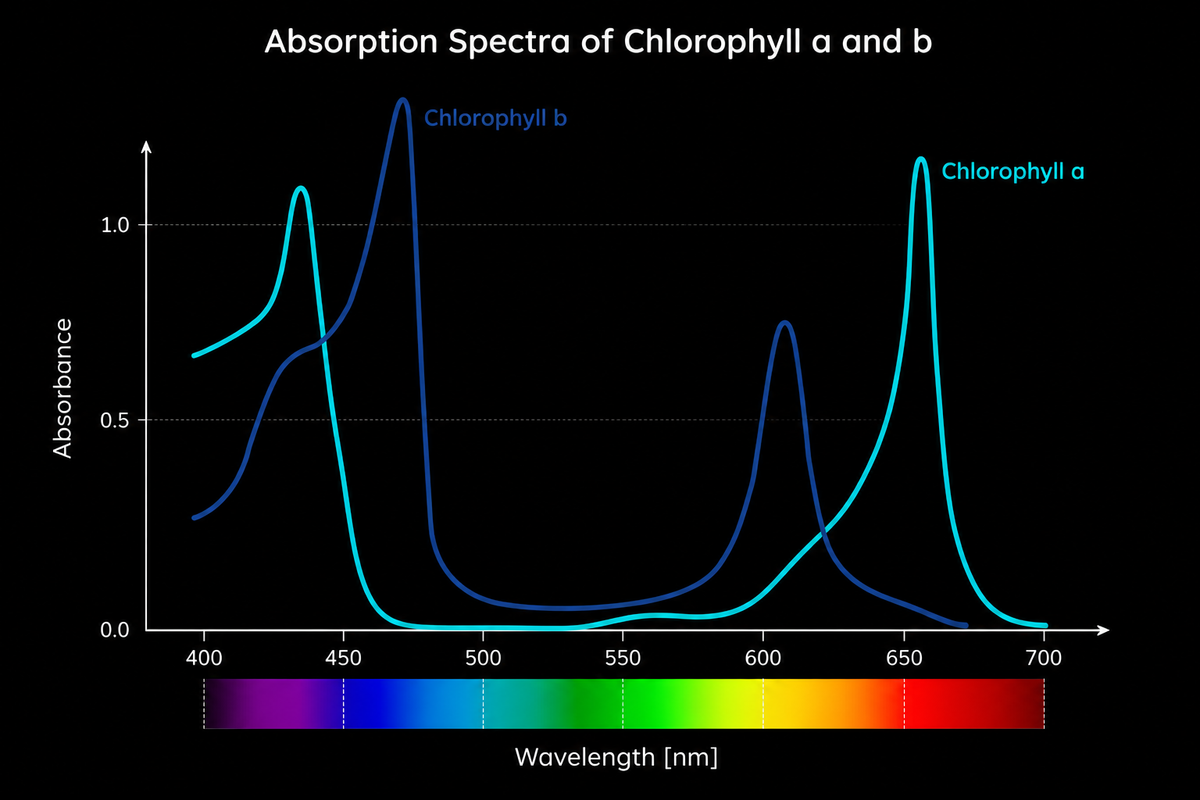
Chlorophyll-a absorbs the wavelengths of violet-blue and red light and functions as a primary electron donor during the electron transport chain in photosynthesis.
Chlorophyll-b is an accessory pigment that transfers the energy absorbed by it to chlorophyll-a, increasing absorption over a wider range of wavelengths (Barb, M.S., Human Physiology & Biochemistry, Central Michigan University, 2017).
As seen from the chlorophyll absorption graph, Chlorophyll-a absorbs light best at 670 nm (red) and 420 nm (violet), while Chlorophyll-b absorbs light best at 470 nm (blue) and 635 nm (red).
Plants + Lasers
Light is vital to a plant’s growth and survival. Flowering plants use the full spectrum of visible light, but some wavelengths are more important than others. The right light spectrum, intensity, and duration work together to trigger flowering, growth, and reproduction.
Sunlight supplies the full spectrum of wavelengths, but plants do not need every color to grow well. Their most essential wavelengths occur at either end of the visible spectrum. At the blue end, plants receive materials for healthy foliage growth, while the red end influences fruiting and flowering.
Early research on different light spectra found that red and blue wavelengths offer the best support for photosynthesis, the process plants use to transform light into energy for growth.
- Blue light (405–470 nm)Encourages vegetative growth through strong root systems, chlorophyll production, and intense photosynthesis. Blue light is often used during early plant growth, such as seedling stages, when flowering is not desired.
- Red light (635–670 nm)Encourages stem growth, flowering, and fruit production while increasing chlorophyll production. Red wavelengths are naturally more prevalent in sunlight during the shorter days of fall and winter (Plant and Soil Sciences E-Library).
Frequencies Enhancing Chlorophyll at 664 nm
The absorption peak at 664 nm belongs to the Qy(0-0) band of Chlorophyll-a. The observed absorption spectrum with this transition peak confirms the monomer structure of the molecule.
Ultrafast spectroscopy reveals vibrational mode frequencies and amplitudes contributing to both ground and excited-state wave-packet motion, confirming energy transfer efficiency in chlorophyll systems (PMC3175064).